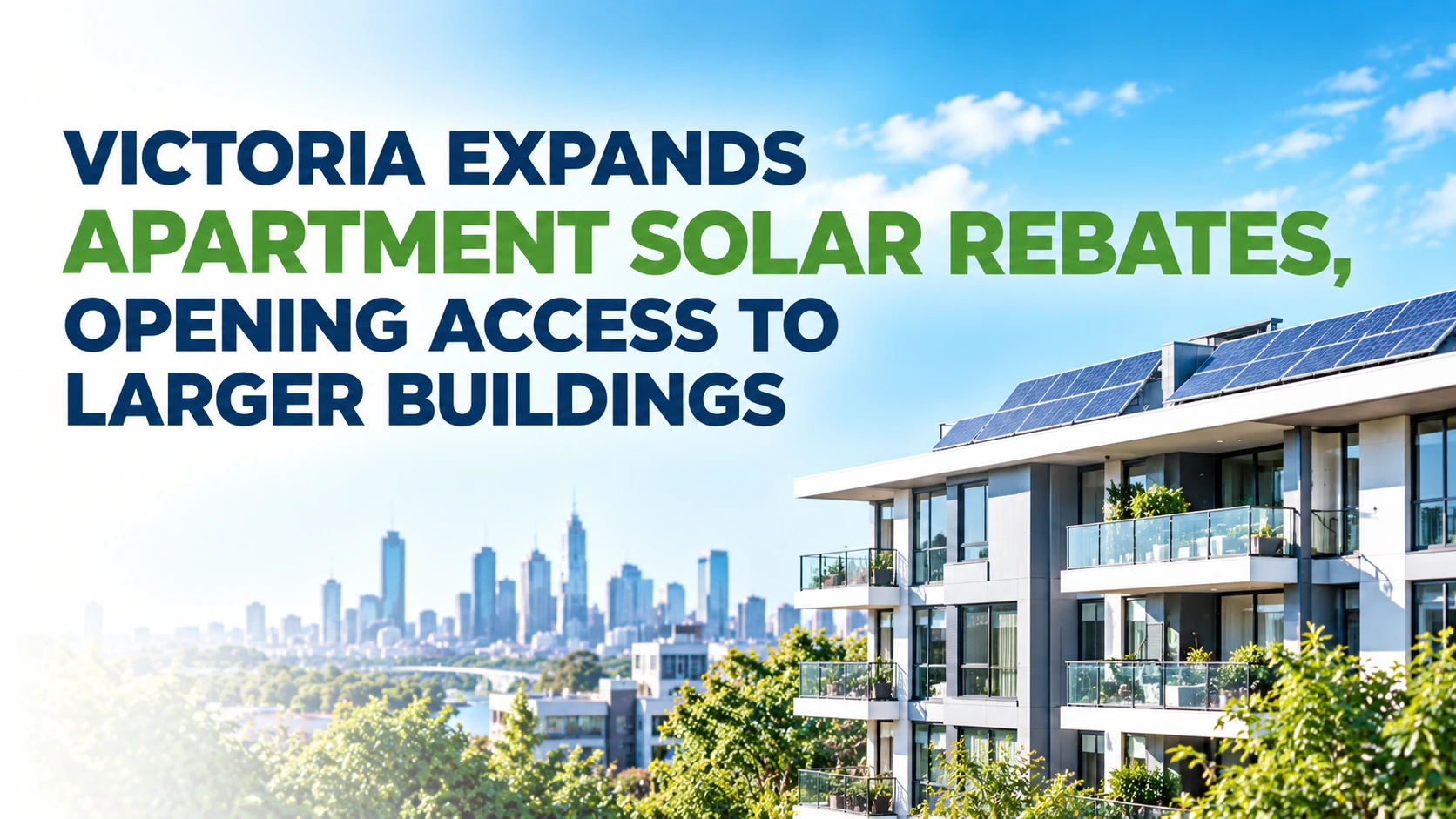
People living in larger apartment buildings across Victoria could now get a new opportunity to cut their electricity bills, following the state’s expansion of the Solar for Apartments program.
The Victorian and Commonwealth governments have removed the program’s median property-value limit and opened an exemption pathway for buildings with up to 150 lots. Previously, the standard eligibility limit was 50 lots. Eligible projects can receive up to $2,800 per apartment, with a maximum rebate of $140,000 per building.
The change addresses a familiar problem for apartment residents: living under a roof suitable for solar does not necessarily mean you can install panels or benefit from the electricity they generate.
Announced on 26 October, the expansion also gives owners corporations more flexibility to use rooftop solar to power shared areas of their buildings. Applications are open until June 2027, subject to available funding.
You may also want to read: What Are The Best Home Energy Saver Loan Upgrades To Make?
Larger Buildings Get Another Route to Solar
Under the expanded rules, buildings with more than 50 lots and up to 150 lots can apply for an exemption, provided they meet the other program requirements. Removing the property-value cap also opens the door to buildings that were previously excluded on that basis.
However, the changes do not mean every apartment development automatically qualifies. Buildings must meet Solar Victoria’s eligibility conditions, and the exemption process must be completed where required.
The rules also cover how the electricity will be shared. Eligible solar systems must supply at least five residential lots, demonstrate a payback period of no more than 10 years under the program’s assessment method, and distribute the financial benefits fairly among participating residents.
The full requirements are available in Solar Victoria’s apartment solar guidelines.
How Much Could Residents Save?
The government estimates that an average household in an eligible multi-unit development could save up to $500 a year on electricity bills. Rebates cover an average of 76% of installation costs, reducing the amount an owners corporation needs to fund upfront.
For residents, the benefit depends on the system installed and how much of its electricity reaches their apartments. The advertised saving is a maximum estimate, not a guaranteed reduction for every household.
There is also a potential benefit for shared building expenses. Owners corporations can allocate up to 20% of generated solar electricity to common property, helping cover the power used in communal areas.
That gives apartment communities another way to use their rooftops to reduce electricity costs, rather than relying entirely on electricity purchased from the grid.
Why Renters Have a Stake in the Expansion
Apartment solar has been harder to arrange than rooftop solar on a standalone house. Residents generally share the roof, while installation decisions and costs often sit with an owners corporation. Renters may have even less control over whether a system is installed.
Victoria’s program is designed to address some of these barriers by funding shared installations and requiring participating residents to receive a fair share of the benefits.
According to Solar Victoria’s latest announcement, more than 150 rooftop solar installations have been completed through the program. Almost half are on rental properties, with more than 2,800 residents already saving on electricity. Another 17 installations are underway and expected to benefit 726 additional residents.
The wider issue was also examined by Victoria’s parliamentary inquiry into renewable and affordable energy for apartments. Its report identified barriers involving owners corporation decisions, technical constraints and the difficulty some renters face in accessing cheaper renewable electricity.
Expanding rebates addresses part of that problem, although the actual benefit will depend on whether more buildings apply, qualify and complete installations.
What About Balcony Solar and Plug-In Batteries?
The apartment rebate expansion is one part of a broader effort to make solar available to households that cannot install a conventional rooftop system of their own.
The Commonwealth is working with Victoria and other states and territories on options for safely introducing plug-in solar and batteries. These technologies could provide additional choices for apartment residents, although they are separate from the current rooftop rebate program.
Federal Assistant Minister for Climate Change and Energy Josh Wilson said: “Where you live should not determine whether you can benefit from solar.”
The government’s work on plug-in systems is still a separate policy process, so apartment residents should not assume those products already qualify for the same rebates or can be connected without checking applicable safety and electrical requirements.
You may also want to read: Australia Adds More Battery Storage in Six Months Than in All of 2025
How to Check If Your Building Qualifies
Applications for the Solar for Apartments program are open until 30 June 2027, or until available rebates are exhausted, whichever comes first.
If you live in an apartment, unit or strata townhouse, start by asking your owners corporation or strata manager whether the building has considered rooftop solar. A resident or renter can also complete the program’s initial eligibility check, although the owners corporation must take the required steps to apply.
Buildings with more than 50 lots should check the exemption requirements before proceeding. Applicants should also consider installation costs, switchboard upgrades, grid connection requirements and how the proposed system will distribute savings among residents.
The official Solar for Apartments website explains the application process and the documents required.
CleanSwitch Take: What We Think
Apartment residents should have a fair chance to benefit from rooftop solar, even when they do not own the roof above them. Victoria’s expanded rebates could help more buildings overcome the upfront cost of installation, while giving renters a better opportunity to share in the savings.
The next step is getting eligible owners corporations to act. The rebate can reduce installation costs, but the outcome that matters to residents is whether the finished system delivers a real reduction in their electricity expenses.
Related news to explore: Australian Wholesale Electricity Prices Fall 27% as Solar Grows