Victorian households can get up to 24 kWh of electricity free every day from October 1, as the state launches a new tariff designed to shift more household energy use into the middle of the day.
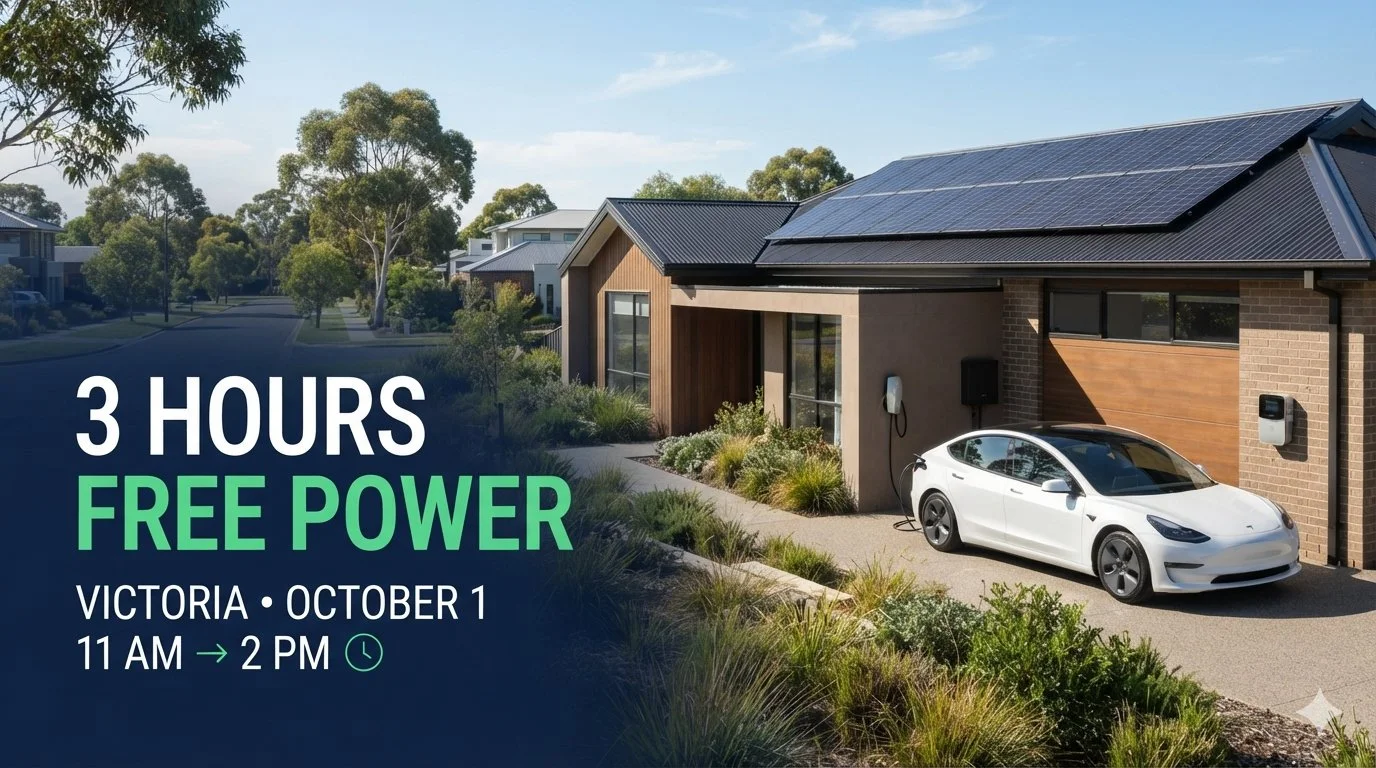
The Victorian Midday Power Saver will give eligible households a free electricity window between 11 am and 2 pm, seven days a week.
But the free period is only one part of the tariff. What households pay during the remaining 21 hours will still determine their bill size.
The Victorian Government has built consumer protections into the scheme. Retailers must warn customers that the offer may not suit every household, explain its likely bill impact where possible and identify other plans they reasonably believe may be more suitable.
Customers can also leave the scheme without an exit fee. The offer will be available to residential customers with a smart meter, while licensed retailers with 1,000 or more customers will be required to offer it.
Victoria’s launch comes less than three months after the federal Solar Sharer scheme began in NSW, South Australia and southeast Queensland.
The Australian Energy Council said on September 17 that about 10,000 customers had opted into Solar Sharer across the three regions. Most joined during July, with the rate of new sign ups slowing in August and the first weeks of September.
SolarQuotes also reported on Victoria’s approaching launch this week, noting the relatively modest early uptake of the federal scheme.
Victoria will now put its own version of the free daytime electricity model into the market.
Three Hours Are Free. The Rest Still Costs Money.
Under the Midday Power Saver, households can use up to 24 kWh between 11am and 2pm each day without a usage charge.
The tariff is designed around a simple idea: move more electricity consumption into the middle of the day, when solar generation is high and wholesale electricity prices can be low.
An EV can charge during the free period. An electric hot water system can be scheduled to run. A dishwasher, washing machine, dryer, air conditioner or pool pump can also be shifted into the window.
But electricity does not become free for the rest of the day.
For a household in the CitiPower distribution area, the maximum regulated rates from October 1 are:
| Time | Maximum usage rate |
|---|---|
| 9pm to 11am | 23.22c/kWh |
| 11am to 2pm | Free |
| 2pm to 4pm | 18.64c/kWh |
| 4pm to 9pm | 40.36c/kWh |
| Daily supply charge | $1.2114 |
The rates differ between Victoria’s five distribution areas, and retailers can offer prices below the regulated maximums.
The evening rate is therefore an important part of the calculation.
A household that uses most of its electricity after work may have less opportunity to benefit from the free window.
A household that can move a significant amount of consumption into those three hours has more opportunity to reduce its usage charges.
That is why the Victorian Government says the offer may not suit households that cannot shift their electricity use. Retailers must provide information about the tariff’s potential cost impact and tell customers about other plans they reasonably believe may be more suitable.
The Loads That Could Make the Difference
The value of the free period will depend heavily on what a household can move into it.
EV charging is an obvious example.
A car that would normally be charged after returning home in the evening could instead take its energy from the free midday window.
Electric hot water is another flexible load. A heat pump can be scheduled to heat water during the free period rather than relying on electricity at a later time.
The same applies to appliances such as washing machines, dryers and dishwashers.
Batteries create another option. A household could potentially charge its battery during the free period and use that stored energy later, although the financial outcome will depend on the home’s existing solar system, battery settings, consumption and electricity tariff.
The Victorian Government specifically identifies hot water, heating and cooling, batteries, appliances and EV chargers as loads that can be shifted into the free period.
Solar Households Have Another Calculation
For households with rooftop solar, the free electricity window is less straightforward.
A home generating plenty of solar power between 11am and 2pm may already be buying very little electricity from the grid during those hours.
The opportunity becomes greater if the household has additional loads that can absorb electricity during the free period.
An EV can charge.
A battery can potentially take in energy.
An electric hot water system can heat water.
That means the value of the tariff is not determined simply by how much electricity a household uses. It also depends on when that electricity can be used.
The government says the offer may suit households with solar, batteries, pool pumps, heating or other energy intensive loads that can be shifted into the middle of the day.
The Early Solar Sharer Numbers Raise a Question
Victoria’s launch follows the first few months of the federal Solar Sharer scheme.
Solar Sharer began on July 1 in NSW, South Australia and south east Queensland, giving eligible households access to free daytime electricity under regulated offers.
On September 17, the Australian Energy Council said around 10,000 customers had opted into the scheme across the three regions.
The AEC said most of those customers switched in July, while the pace of new sign ups slowed during August and the first weeks of September.
The AEC also said that, among customers being tracked by some retailers, about half were better off on Solar Sharer than they would have been on their retailer’s best alternative offer.
That is not a finding about every Solar Sharer customer.
The AEC described its assessment as informal and based on information supplied by participating retailers. It also noted that customers need to compare Solar Sharer with market offers, not just the regulated Default Market Offer.
SolarQuotes has similarly highlighted the importance of looking beyond the free period when assessing these tariffs. Its reporting on Solar Sharer has pointed to the way retailers recover costs through charges outside the free window.
The early experience therefore gives Victoria something to compare with as its own scheme begins.
Victoria Has Put More Information Around the Switch
The Midday Power Saver will not be an automatic change for households.
Customers must choose to opt in through their electricity retailer.
Before the switch, retailers must tell customers that the tariff may not be suitable in all circumstances and explain the potential effect on their electricity costs where possible.
They must also identify other plans they reasonably believe could be more suitable based on relevant information about the customer’s energy use.
Customers will have a cooling off period after signing up and can switch off the Midday Power Saver at any time without an exit fee.
The scheme will also be regulated and reviewed annually by Victoria’s Essential Services Commission.
How Much Could Households Save?
The Victorian Government estimates that households could save between $149 and $428 a year, depending on their circumstances and how much electricity they shift into the free period.
For households with an EV, the government estimates potential savings of up to $1,102 a year, including up to an additional $674 from moving EV charging into the free period.
Those figures are government estimates rather than guaranteed savings.
The underlying assumption is that households actually move electricity consumption into the free window. The government says the $149 to $428 estimate assumes households shift between 5% and 30% of their electricity use into those three hours.
For households that cannot make that shift, the economics can look different because electricity prices outside the free period may be higher.
October 1 Will Put the Model to the Test
Victoria’s Midday Power Saver starts on October 1, 2026.
The policy is straightforward on paper: give households up to three hours of free electricity, encourage them to move flexible demand into the middle of the day and make greater use of the electricity system when solar generation is abundant.
The harder question is what happens to household bills after the entire tariff is taken into account.
The early Solar Sharer experience suggests that the answer will vary between households, with the amount of electricity shifted into the free period playing an important role.
Victorian households considering the offer can compare it with other electricity plans through the government’s independent Victorian Energy Compare service before switching.
From October 1, the three free hours will be easy to see on the bill.
The more important number will be what happens during the other 21.