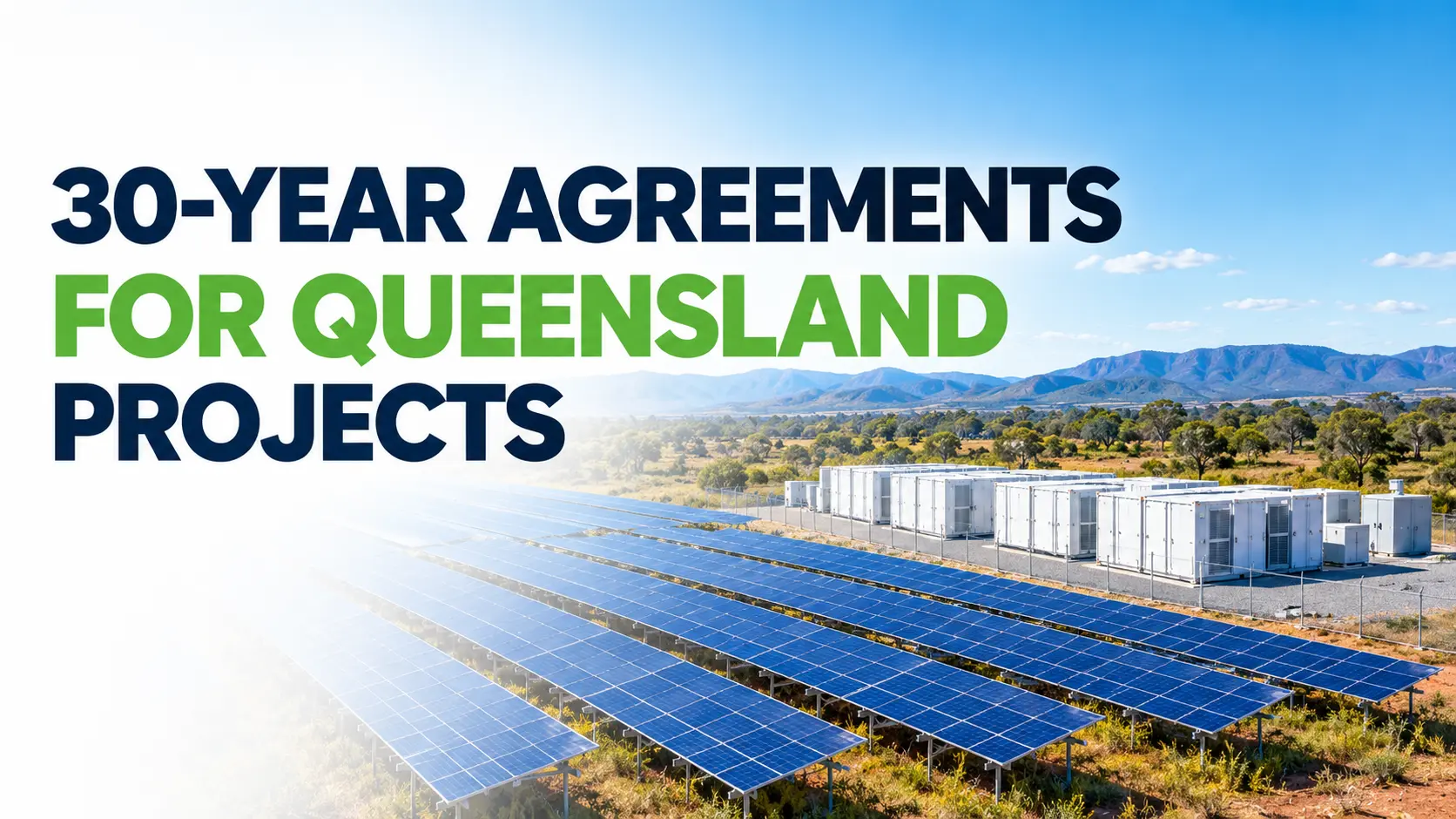
European Energy has signed 30-year agreements with Traditional Owners covering three Queensland solar and battery projects, establishing long-term arrangements for cultural heritage protection and community benefits as the developer expands its Australian renewable energy portfolio.
Announced on 21 October 2026, the agreements cover the company’s Bullyard, Upper Calliope and Tyrone projects. They were signed with the FNBGGGTB Group, which represents the Bailai, Gurang, Gooreng Gooreng and Taribelang Bunda peoples, Traditional Owners and native title holders of the Bundaberg and Gladstone regions.
According to European Energy’s official announcement, the agreements establish processes to protect culturally significant sites and provide long-term funding for social, cultural and environmental initiatives selected by Traditional Owners.
More news you may want to read: Australia Targets Solar Farm Construction Costs With $250m Fund
What the Agreements Cover
The agreements build on an initial Exclusivity Agreement signed in 2024, which established a framework for investigating potential development sites.
The new arrangements go further by setting out project-specific commitments covering the developments’ lifespans. They comprise two main components.
The Cultural Heritage Management Agreements establish processes to identify and protect culturally important sites and artefacts during project development. The Shared Prosperity Agreements provide financial contributions to initiatives chosen by the Traditional Owners themselves.
European Energy Australia Managing Director Catriona McLeod said the agreements would help the company progress its projects while protecting cultural heritage and ensuring Traditional Owners share in the benefits.
“Developing renewable energy projects requires long-term cooperation with the communities and landholders involved. These agreements establish a framework for progressing our projects while protecting cultural heritage and ensuring that the Traditional Owners share in the benefits generated over the lifetime of the projects,” McLeod said.
She added that the agreements reflect the company’s approach to building its Australian renewable energy portfolio.
“For European Energy, establishing these partnerships is an important part of developing a renewable energy portfolio in Australia. The agreements reflect our long-term approach to project development and our commitment to working closely with Traditional Owners,” she said.
The arrangements follow more than three years of cooperation between the developer and the FNBGGGTB Group.
Three Projects Remain at Different Development Stages
The agreements cover three projects in Queensland, but their development status varies.
European Energy’s Australian project portfolio identifies the Upper Calliope Solar Farm as a proposed 1.1-gigawatt development, alongside its associated battery project. The developer’s Upper Calliope project update confirmed planning approval in December 2025, allowing the project to progress towards grid connection, final design and construction preparation.
The Bullyard Solar Farm project is a proposed 97-megawatt solar development near Bucca, west of Bundaberg. European Energy says the solar component received development approval in November 2024, while the proposed battery component remains subject to its own assessment and approval process.
European Energy also lists the 400-megawatt Tyrone Solar Farm as under development in its Australian portfolio.
The latest agreements should not be confused with final investment decisions or construction approvals for all three projects. Instead, they establish longer-term arrangements with Traditional Owners as development progresses.
Why Traditional Owner Partnerships Matter
Large renewable energy projects can operate for decades, making the relationship between developers and the communities connected to their sites an important part of project planning.
Cultural heritage protections help establish how culturally significant places and artefacts will be identified and managed. Benefit-sharing arrangements also provide a framework for directing funding towards priorities determined by Traditional Owners rather than leaving those decisions entirely to the developer.
The partnership has already received industry recognition. In 2025, the Clean Energy Council recognised the partnership through its First Nations Engagement and Participation Award.
Matthew Cooke, Group Chief Executive Officer of the FNBGGGTB Group, said the relationship had strengthened over three or four years.
“We’ve been working with European Energy for three or four years now, and we’ve seen that relationship go from strength to strength over that time. The renewables transition offers exciting opportunities for First Nations people, and these partnerships allow us to maximise those opportunities,” Cooke said.
More latest news to explore: Victoria Approves 1.5 GW Wind Farm With 600 MW Battery Storage
CleanSwitch Take: What We Think
We believe European Energy’s 30-year agreements are a positive step towards ensuring renewable energy development respects Traditional Owners and delivers lasting benefits for their communities. Giving the FNBGGGTB Group a say in how community funding is used is particularly important because it allows the benefits to reflect the priorities of the people they are intended to support.
However, European Energy has not disclosed the financial value of the contributions, so the scale of the community benefits remains unclear. The real test will be how the company delivers on its commitments as the three projects progress.
Our team at CleanSwitch will continue following the three projects and keep you informed as more details emerge about their development and how the agreements benefit Traditional Owner communities.