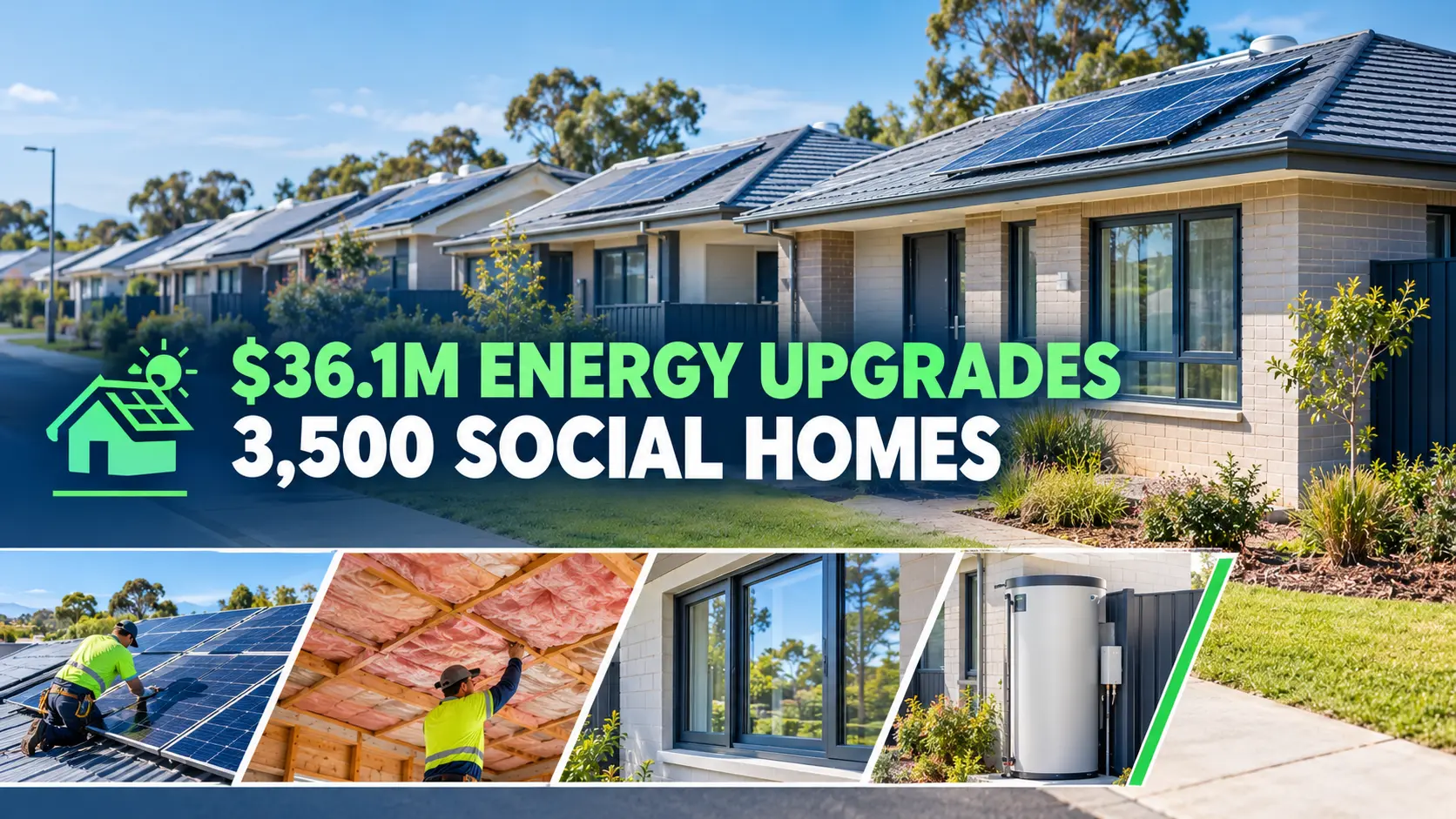
South Australia is expanding an energy-efficiency program for social housing, with $36.1 million allocated to upgrade about 3,500 additional public and community housing properties.
The funding is being delivered through the federal Social Housing Energy Performance Initiative (SHEPI), with work to include draught proofing, LED lighting, electric hot water systems, improved window glazing and ceiling insulation.
The latest funding brings the number of South Australian social housing properties supported through SHEPI to about 7,500. The first round involved $42.8 million in combined federal and state funding for up to 4,000 properties.
The new funding was announced in September, with installations expected to begin this year and the improvements due to be completed by 2030.
Why Are These Homes Getting Energy Upgrades?
A large share of South Australia’s social housing stock was built before modern minimum energy-efficiency standards were introduced.
The South Australian government says SA Housing Trust homes have an average age of 46 years. That means many properties were designed and built before insulation, efficient appliances and other measures became more common in residential construction.
The upgrades target some of the features that can affect how much energy a home needs throughout the year.
Ceiling insulation can reduce heat transfer through the roof, while draught proofing can reduce unwanted air movement. Improved glazing can help limit heat entering or leaving the home through windows.
Replacing inefficient equipment with LED lighting and electric hot water systems can also reduce the energy required for everyday use.
The federal government says SHEPI upgrades are intended to reduce energy use and pressure on household energy bills, while making homes warmer in winter and cooler in summer.
How Does South Australia Fit Into The National SHEPI Program?
The South Australian investment is part of a much larger national program.
SHEPI has a total investment of $1.1 billion and is expected to reach more than 100,000 social housing properties across Australia by mid-2031. The Australian Government is contributing $800 million, with the remainder coming through state and territory arrangements.
More than 41,000 properties had already received upgrades when the federal program was updated in September 2026.
The national program covers a wider range of measures than those announced for the latest South Australian round. Depending on the property and state or territory program, upgrades can include insulation, draught sealing, shading, efficient heating and cooling, hot water systems, electric cooking appliances, solar panels and batteries.
Properties are selected by state and territory governments rather than through an individual household application process. The federal government says factors such as location, climate and property condition are considered when deciding which homes receive upgrades.
What Will The $36.1m Cover?
South Australia’s latest allocation is spread across three years and is designed to improve the energy performance of a further 3,500 homes.
The state’s 2026–27 Budget describes the expansion as funding insulation upgrades and the replacement of inefficient appliances, with the aim of delivering energy and cost savings for tenants in public and community housing.
The specific measures announced include:
- Draught proofing
- LED lighting
- Electric hot water systems
- Window glazing upgrades
- Ceiling insulation
For residents, the effect will depend on the condition and characteristics of each property and which upgrades are installed. The program is not a blanket package where every home receives every measure.
For South Australia, the expansion also shows how energy-efficiency work is increasingly being treated as part of the maintenance and improvement of existing housing, rather than something that only needs to be considered when new homes are built.
The national SHEPI program is continuing across states and territories, with the broader target of upgrading more than 100,000 social housing properties by mid-2031.