Australia has taken its first step towards allowing plug-in solar and batteries, a move that could give renters and apartment residents another way to generate their own electricity.
Energy ministers agreed on September 11 to explore how the systems could be safely used across Australia. They are not legal for ordinary household use yet. The government will now work with the states and territories on what needs to change before they can be used.
That matters most for people who cannot put solar on a roof in the first place.
“Now we’re taking the next step, by looking at how even more Australians can take advantage of free, abundant sunshine to cut their energy bills — even if they don’t have a roof.”
— Chris Bowen, Australian Energy Minister
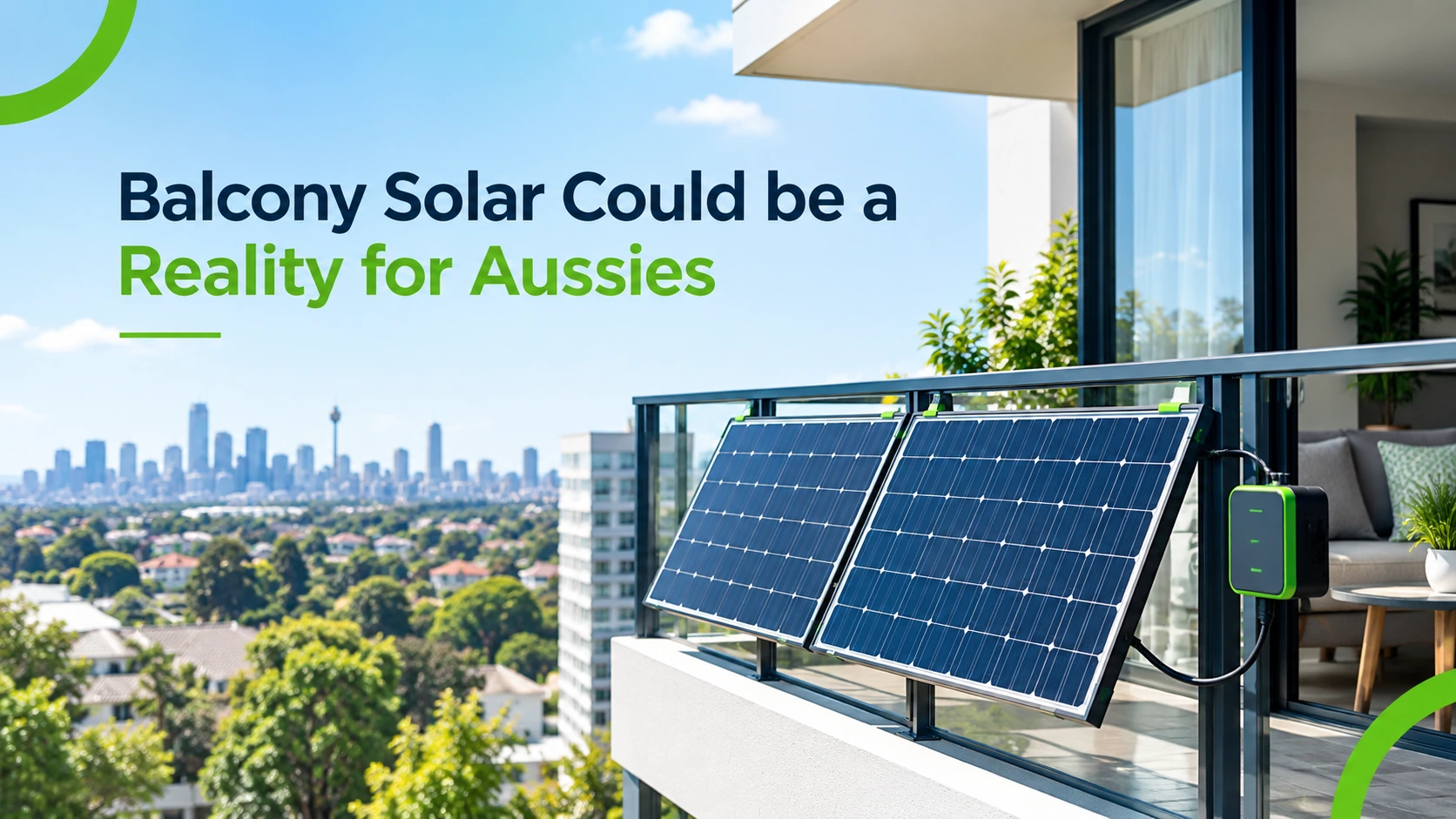
What Is Balcony Solar?
Plug-in solar systems are small solar panels connected to an inverter and a standard household power point.
They are often called balcony solar because they can be placed on an apartment balcony, although they can also be used in backyards.
The systems being used overseas typically produce between 600 and 800 watts and cost up to about $1,300, according to the ABC.
They are already widely used in Germany. The UK legalised plug-in solar in August, while New Zealand has said it plans to move in the same direction.
Australia has so far taken a different approach. The systems can be sold here, but they cannot legally be plugged in and used.
Why Renters Are Paying Attention
Rooftop solar is relatively straightforward for a homeowner who controls the roof.
A renter does not have that option.
Installing permanent equipment usually requires the landlord’s approval, while apartment residents can also face restrictions from building owners or body corporates.
That leaves a large group of Australians paying electricity bills without having much say over the equipment attached to their homes.
More than 30% of Australians rent, or almost 3 million households, according to ABC reporting.
Solar Citizens has campaigned for plug-in systems to be legalised. Its chief executive, Heidi Lee Douglas, said the move would give renters and apartment residents access to solar that has largely been out of reach.
“This commitment to make plug-in solar and plug-in batteries legal in Australia is great news for more than a third of Australians who rent or live in apartments.”
— Heidi Lee Douglas, CEO of Solar Citizens
There is another attraction for renters. If the system is not permanently attached to the property, it could move with them when they leave.
How Much Electricity Could They Produce?
A plug-in solar system is much smaller than a typical rooftop installation.
The panels generate electricity during the day, and an inverter feeds it into the home’s electrical system through a standard power point. That electricity can then offset some of the power being drawn from the grid.
It will not produce enough electricity to replace a conventional rooftop system for most households.
The appeal is that it does not need a roof.
A renter in an apartment may have no access to rooftop space at all. A small balcony system gives them another option.
Savings will depend on the system and how much electricity a household uses. Solar Citizens estimates an average plug-in solar panel could save around $300 to $400 a year, while a plug-in battery could potentially save more.
Those are estimates, not guaranteed savings. Experts quoted by the ABC put the potential payback period at around four to 10 years.
Australia Still Has To Work Out The Rules
This is where the September 11 decision matters.
Energy ministers have agreed to explore the safe deployment of plug-in solar and batteries. The federal government will work with states and territories to identify the measures needed and report on the next steps by the end of 2026.
At the same meeting, ministers endorsed the new Consumer Energy National Technical Regulatory Framework. It establishes a national technical code for consumer energy resources and sets obligations for suppliers and installers.
The framework covers technologies including solar inverters, batteries and EV charging equipment.
But it does not mean Australians can start plugging balcony panels into their homes tomorrow.
Safety standards and product requirements still need to be worked through before plug-in systems can be legally used.
Landlords And Body Corporates Could Still Have A Say
Legalising the technology would remove one major barrier, but it would not necessarily settle every issue for renters.
Someone still has to decide where a panel can be placed.
A landlord may have concerns about a balcony installation. An apartment building may have its own rules. Body corporates could also have a say in what can be attached to a balcony or placed in a common area.
Germany offers one example of how this might work. Tenants need permission to install plug-in solar, although landlords need a valid reason to reject a request in certain circumstances.
Australia has not decided what its rules will look like.
There is also no federal subsidy or rebate announced specifically for plug-in solar or batteries.
What Happens Next?
For now, plug-in solar remains illegal for ordinary household use in Australia.
What changed on September 11 is that governments have agreed to work towards a way of allowing it.
Solar Citizens wants plug-in solar and batteries available across Australia by July 2027. The government has committed to reporting on the next steps by the end of this year.
For renters and apartment residents, the idea is simple: solar could eventually become something they can take with them rather than something they can only use if they own the roof.
Whether that happens will depend on the rules Australia puts around safety, installation, landlords and apartment buildings.