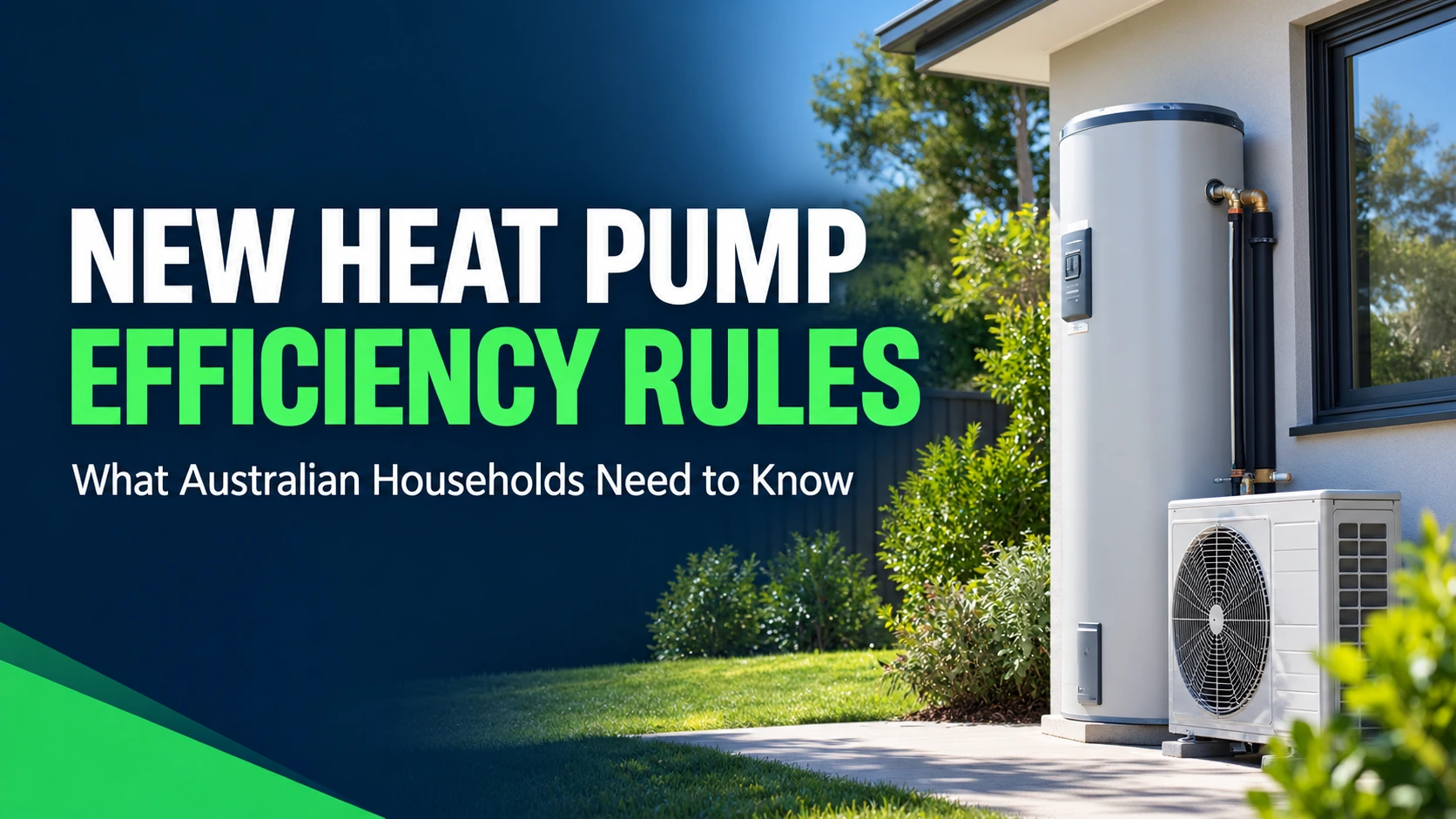
Heat pump demand in Australia is growing. In 2025, heat pump water heaters accounted for around 12% of Australian hot water system sales, according to the federal government’s April 2026 decision report. As more households turn to these systems, the government is moving to introduce minimum efficiency rules to help ensure products meet clear performance standards.
The proposed changes follow years of work to improve heat pump efficiency and give buyers better information. Public consultation on the draft regulations closed on 5 October 2026, so the government can now move towards finalising the rules. (Read the official announcement.)
Why Is the Government Introducing New Rules?
Heat pumps can use around 30% of the energy required by a conventional electric hot water system, according to the government’s hot water guide. However, their efficiency varies between models and operating conditions.
Until now, Australia has not had specific mandatory minimum efficiency standards for heat pump water heaters. As demand has grown, the government has moved to address this gap by setting a minimum performance level and making product information easier to compare.
What Will Change for Buyers?
The proposed rules would require covered heat pump water heaters to meet a minimum efficiency level before suppliers can sell them. Suppliers would also need to register covered products and provide performance information under consistent testing and reporting rules.
These changes matter because the figures manufacturers publish today can be difficult to compare. For example, a heat pump’s coefficient of performance (COP) shows how much heat it produces for the electricity it uses. A COP of 3 means the system produces three units of heat for each unit of electricity under the stated test conditions.
However, performance changes with air temperature and other operating conditions. A figure recorded in warm weather may not reflect how the same system performs during a cold winter. By making testing more consistent, the proposed rules aim to give buyers a fairer basis for comparing products.
The government’s consultation documents explain the proposed requirements, which the final determination will confirm.
Should You Wait Before Buying a Heat Pump?
Not necessarily. Although the rules are getting closer, they aren’t in force yet, and the final determination will confirm when suppliers must comply.
If your existing hot water system needs replacing, compare the full installed price, expected running costs, tank capacity and warranty. You should also check whether the model suits your local climate, since not all heat pumps are designed for areas where winter temperatures regularly fall below 5°C.
The government plans to introduce minimum efficiency standards first, followed by energy-rating labels likely around 2028. However, the labelling timeframe still needs confirmation.
CleanSwitch Advice
If you’re planning a hot water upgrade, don’t choose a heat pump based on its advertised efficiency figure alone. Ask the supplier how the product was tested, compare its expected running costs, and check that it suits your climate and household’s hot water needs.
The new rules should make product comparisons easier once they take effect. Until then, checking the technical details, installation costs, and available rebates will help you make a more informed decision.