
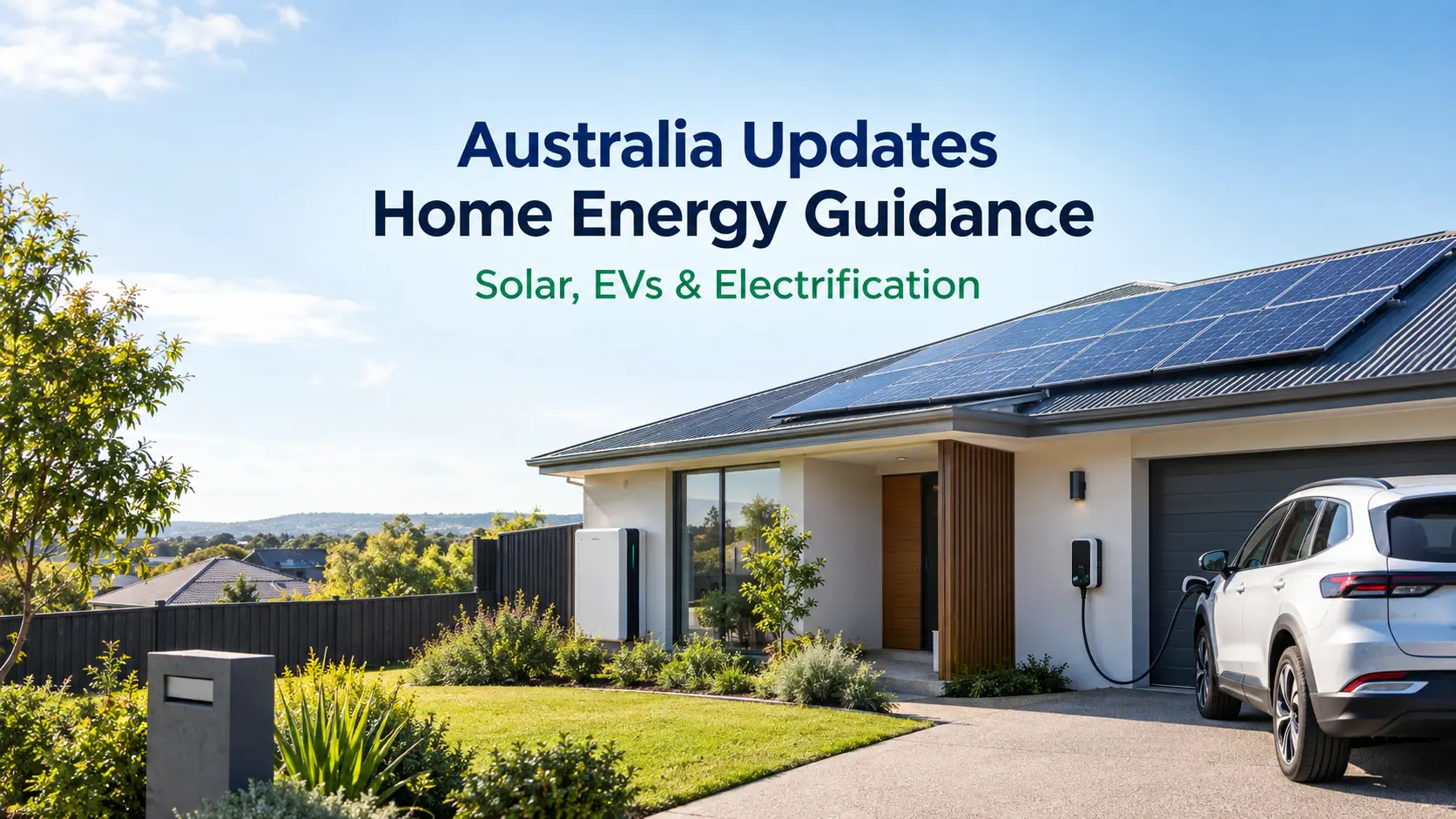

Australian homeowners now have updated guidance on solar, batteries, electrification, electric vehicles, renovations and apartment upgrades after Your Home released almost 30 new and revised pages on September 3.
The update includes six new chapters covering buying an apartment off the plan, electric vehicles, electrification, minor home upgrades, prefabricated homes and upgrading common property in apartment buildings. Existing chapters on batteries, rooftop solar, renewable energy, heating and cooling, hot water, insulation, renovations and additions, and smart homes and energy management have also been updated.
What Has Changed On Your Home?
The latest home energy guidance Australia adds advice on both smaller household improvements and larger projects.
Your Home says the new material includes guidance on simple upgrades, as well as suggestions for approaching larger renovations. It has also updated its information on apartments, common property in apartment buildings and prefabricated homes.
The six new chapters are:
- Buying an apartment off the plan
- Electric vehicles
- Electrification
- Minor home upgrades
- Prefabricated homes
- Upgrading common property in apartment buildings
The updated chapters cover a much wider range of subjects, including batteries, rooftop solar, hot water systems, heating and cooling, insulation, renewable energy, renovations and additions, appliances and technology, and smart homes and energy management.
Your Home also says more updates and new resources are on the way.
Solar Guidance Now Covers Future Electricity Use
The updated Rooftop solar chapter says more than 40% of Australian households have solar panels, which it describes as the highest uptake of household solar in the world. It also says the average solar installation size now exceeds 10 kW.
For homeowners sizing a system, Your Home recommends considering current and future electricity use. Its examples include household batteries, electric vehicles and electrification of heating or hot water.
The guidance also says solar PV systems are increasingly being supported by batteries and smart household controls to improve cost savings and energy independence.
Your Home also points to a change in the economics of rooftop solar. It says feed-in tariffs are now typically around 3 to 5 cents per kWh, compared with retail electricity prices of around 25 to 45 cents per kWh. That makes using more of the solar electricity at home increasingly important to the economics of a system.
The page gives a practical example: households can shift electricity use into daylight hours by running appliances such as hot-water systems, dishwashers and washing machines when solar is being generated, or by charging a home battery or EV.
For homeowners considering solar, the updated guidance puts more emphasis on how much electricity the household uses, when it uses it and what new electrical loads may be added in future. Your Home says these factors should be considered when sizing a system.
Electrification Gets Its Own Chapter
Electrification is one of the six new chapters added in the September update.
Your Home defines home electrification as replacing appliances and equipment that use fossil fuels, such as gas appliances and petrol vehicles, with more energy-efficient electric alternatives.
Its renovation guidance gives examples including replacing gas hot water with an efficient heat-pump system, gas or solid-fuel heating with reverse-cycle air conditioning, and gas cooktops with electric induction cooktops.
The same chapter says a renovation is a good time to add solar PV, batteries and EV charging, or design the electrical system to make later installation easier.
Your Home says going all-electric can reduce greenhouse gas emissions and avoid gas bills, while noting that additional electrical circuits may be needed for technologies such as heat-pump hot water, air conditioning, induction cooking and EV charging.
EV Charging Is Part Of The Renovation Advice
Electric vehicles are another new chapter in the September update.
The renovation guidance says a renovation is a good time to add EV charging or make a home EV-ready. It also warns that many older homes may not have enough electrical capacity for EV charging without upgrades.
The work may include upgrading the switchboard and pre-wiring between the switchboard and charging location. Your Home says EV chargers require a dedicated circuit.
The guidance also says homeowners planning full electrification may want to consider a three-phase electricity supply, depending on the technologies being added.
Your Home therefore links EV-ready planning with other electrical work that may be carried out during a renovation, including switchboard upgrades, pre-wiring and planning for future electrification.
Renovations Can Open Up More Upgrade Options
Your Home describes renovations and additions as an opportunity to make a home cheaper to run and more comfortable, liveable and resilient to temperature extremes.
The chapter says renovation work can expose parts of a building that are normally difficult to access, making it a cost-effective time to upgrade insulation.
It also specifically identifies renovations as a good time to add solar PV, batteries and EV charging, or to design electrical systems for easier installation later.
For homeowners planning a larger renovation, Your Home recommends considering the home’s future needs as part of the planning process. Its guidance includes solar, batteries, EV charging, efficient electric appliances and insulation among the areas that can be addressed during the work.
For solar and batteries, the guidance also suggests homeowners can discuss switchboard upgrades and pre-wiring with an electrician while renovation work is underway. Depending on the size of the system and future additions such as electric vehicles or batteries, a three-phase supply may also need to be considered.
Apartment Owners Have More To Consider
The September update adds a new chapter on upgrading common property in apartment buildings and updates the existing Choosing and upgrading an apartment chapter.
Your Home says apartment owners can have less choice over upgrades than owners of freestanding houses, and some improvements require approval from the owners corporation.
Its apartment guidance also explains that common property can include parts of a building that an individual resident might otherwise assume belong solely to their apartment. Depending on the building, this can include areas such as roofs, balconies, boundary walls, windows and doors.
Those ownership arrangements can affect energy upgrades.
Your Home’s apartment guidance discusses issues involving solar PV, hot-water systems and EV charging, including situations where wiring or equipment affects common property. It advises prospective apartment buyers to check strata records and by-laws and consider whether those arrangements could affect future sustainability upgrades.
For apartment residents, the process of adding an energy upgrade can therefore involve the wider building as well as the individual dwelling.
Your Home’s rooftop solar guidance also points to shared solar models that can allow individual apartments to benefit from a single rooftop system, with energy either allocated to units or used to offset common-area electricity consumption.
The September Update Covers More Than Solar
The September update goes beyond solar and electrification.
Your Home has added new guidance on electric vehicles, electrification, minor home upgrades, prefabricated homes, buying an apartment off the plan and upgrading common property in apartment buildings. It has also revised existing guidance across areas including batteries, rooftop solar, renewable energy, heating and cooling, hot water, insulation, renovations and additions, and smart homes and energy management.
The new Minor home upgrades chapter provides advice on smaller changes, while the updated renovation guidance deals with larger projects and the opportunities they create to improve energy performance.
It brings together advice that can apply to a homeowner replacing one appliance as well as someone planning a major renovation or considering a new apartment.
What The Update Means For Homeowners
The September update brings guidance on solar, batteries, electrification, EVs, renovations and apartment upgrades into the same national resource.
That matters because these decisions can overlap. A homeowner planning solar may also be thinking about a battery or EV. Someone renovating may have an opportunity to upgrade insulation, prepare for EV charging or make electrical changes before adding additional electric appliances.
Apartment owners face another set of considerations because some upgrades can involve common property and owners-corporation approval.
For a homeowner planning one upgrade today and another a few years from now, that broader picture is worth considering before work begins. Future electricity use can affect solar system sizing, while electrical capacity may become more important as more household technologies switch to electricity.
The update does not tell homeowners what they must install. It gives them refreshed information to consider before making those decisions.
And Your Home says more updates and new resources are still on the way.