Your power bill just landed. It’s higher than last quarter, and you haven’t changed a single habit. Same showers, same aircon settings, same everything. So why does it keep climbing?
Because your house is probably losing energy somewhere you’ve never thought to check. Maybe it’s a hot water system that’s been running since the Howard era. Maybe it’s a gap under the back door you’ve walked past a thousand times without noticing the draught. A home energy audit is how you find out, instead of guessing and hoping next quarter’s bill behaves itself.
Quick answer: a home energy audit is a walk-through assessment of how your home uses and wastes energy. Insulation, heating, cooling, hot water, appliances, air leaks- all of it. At the end, you know where the losses actually are, instead of just knowing the bill is bigger than it should be.
This article covers what an audit involves, why it matters more here than in most countries, and how to spot the obvious problems yourself before paying anyone.
What Is a Home Energy Audit, Really?
Forget the technical framing. It’s basically a health check for your house. Someone walks room to room, checking how energy moves in and out, sometimes a professional with a thermal camera, sometimes just you with a torch on a Saturday.
Either way, the areas that usually get checked are pretty consistent:
- How well the home holds onto heat in winter, and keeps it out in summer
- Where air is sneaking out through gaps, cracked seals, or old windows
- Whether appliances and lighting are drawing more power than they need to
- How old, and how efficient, the hot water system actually is
- General usage patterns, since two identical houses can use very different amounts of power depending on who lives there
Is It Actually Worth Doing in Australia?
For most homes, yes.
A lot of Australian housing was built before insulation standards meant much. That’s not a knock on anyone; it’s just when the houses went up. The result: a lot of homes losing real heating and cooling energy through the roof and walls, quietly, every day, because you can’t see heat leaving a building.
A professional audit runs a few hundred dollars typically, and often pays for itself within a year or two once you act on what it finds. Even a rough DIY version can be enough to change habits and shave real money off a bill.
You may find this useful: 10 Ways to Make Your Home More Energy Efficient
Why This Matters More Here Than Most Places
Australia’s climate doesn’t get “mild” very often. Scorching summers in the north, cold winters down south, and plenty of variation in between. That range puts constant pressure on heating and cooling systems, and any inefficiency in the house gets amplified by it.
Older homes make it worse, since efficiency wasn’t much of a conversation when they were built. Combine that with electricity prices going one direction, and you get bills that climb steadily even when your habits haven’t changed at all.
So Why Is Your Bill So High, Specifically?
Big bills rarely come from one dramatic issue. It’s almost always a handful of smaller ones stacked together: a window that doesn’t quite seal, a hot water system working harder than it should, a fridge on its last legs. None of these look like much alone. Together, they quietly add up.
An audit is just the process of finding that stack and working through it, one item at a time.
Just Moved In? Do This Before Your First Bill Shows Up
If you’ve recently moved, this is genuinely the ideal time. You don’t know the house yet, its habits, its quirks, whatever the last owners left running quietly in a cupboard somewhere. That unfamiliarity works in your favour, oddly enough, since you’ve got a clean window to check everything before the routine settles in.
It also gives you something to compare against later. Live there six months, and it’s harder to tell whether a high bill is just “how this place runs” or an actual problem worth fixing.
Worth doing: ask the agent or previous owner for old electricity bills, if they’ll share them. Line those up against your own findings, and you’ll know fast whether you’ve bought an efficient home or inherited somebody else’s bad habits.
What Tends to Turn Up
The results genuinely surprise people sometimes. A short list of what commonly gets flagged:
- Draughts around doors and windows, sometimes even skirting boards
- Gaps in insulation, particularly in older roof cavities
- Appliances running less efficiently than they should
- Losses from an ageing or poorly insulated hot water system
- Lighting still burning more power than it needs to
- A clearer overall picture of where the energy actually goes, room by room
Worth knowing: most of this is invisible in daily life. You’re not going to feel a slow insulation gap while making dinner. You won’t notice a hot water system bleeding heat overnight. That’s the whole point of doing an audit; it catches what you physically can’t.
DIY or Professional? Depends on How Deep You Want to Go
There are two paths, really, and most people end up doing a version of both, DIY first, professional later if warranted.
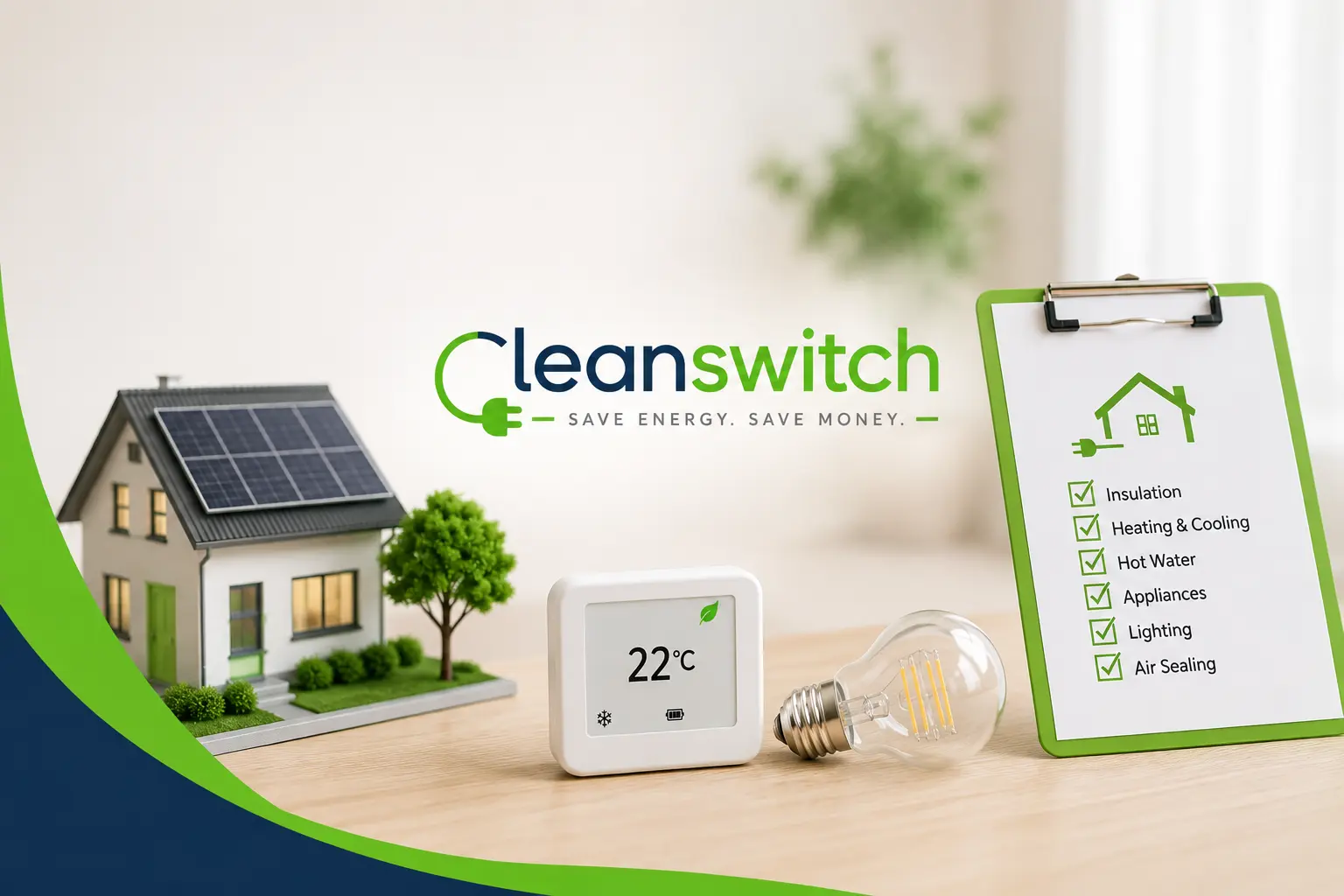
DIY costs nothing but time. Walk the house with a checklist, feel around doors and windows for draughts (early morning works well, before the house warms up), check appliance star ratings, note how old the hot water system is. It won’t catch everything, but it flags the obvious stuff for free.
A professional audit goes further. Thermal imaging picks up heat loss your hand would never feel, and the report sometimes opens doors to rebates you wouldn’t have known to look for.
Honest suggestion: start DIY. If that turns up more than a couple of issues, bring in a professional for something more thorough.
Don’t Size Your Solar or Battery on a Guess
If solar’s on your radar, do the audit first. This one matters, not just as advice, but financially.
Solar and battery systems get sized around your real energy use. Skip the audit, and you’re guessing, and guesses break one of two ways: you oversize the system and pay for capacity you’ll never use, or undersize it and end up frustrated when it doesn’t cover what you need.
This is one of the more expensive mistakes people make, going solar off a guess rather than actual numbers. The same logic carries over to batteries, since knowing when your household actually draws power, especially overnight when the sun’s no help, is the difference between a battery that earns its keep and one that just sits there.
Turning What You Find Into an Actual Plan
Once you’ve got your results, it’s tempting to go straight for the big stuff, solar panels, heat pumps, the lot. Hold off a second, though, because the boring fixes usually pay off first.
Sealing draughts, topping up insulation, swapping old bulbs for LEDs- these are cheap, quick, and you’ll often see the difference within weeks. Bigger investments like solar or heat pump hot water still matter, but they perform better once the basics are sorted.
Bottom line: fix the cheap stuff first. Insulation and draught-sealing pay for themselves fast, and everything you spend money on after that works harder as a result.
Where This Leaves You
None of this has to be complicated or expensive to get started. A home energy audit is the process of finding out where your house wastes energy, so you can fix the right things in the right order instead of guessing. Whether you’re cutting bills, thinking about solar, or just settled into a new place, it’s the step that makes everything after it actually work.
FAQs About Home Energy Audit
Is a home energy audit worth it in Australia?
For most homes, yes. Given the climate range and the age of a lot of housing stock here, it usually pays for itself within a year or two.
How much can you actually save from doing one?
It varies by house, but savings tend to come from small fixes stacking up, draughts, insulation, appliances, rather than one dramatic change.
What’s the difference between a home energy audit and a NatHERS assessment?
NatHERS rates a home’s thermal design, mostly for new builds or renovations. An audit is about how you’re actually living in and using the house right now.
What about a Residential Efficiency Scorecard?
That gives your home a star rating based on its features. An audit goes further and gets into your specific usage, pinpointing where it’s being lost.
Should I get an audit before installing solar panels?
Yes, honestly. It means your system gets sized to what you actually use, not a rough estimate.
Can an audit improve my property’s efficiency rating?
Not directly. But the fixes it points you toward- insulation, sealing, hot water upgrades- can lift your rating over time.