
Australia solar rebates are government incentives that help residents reduce the cost of installing eligible rooftop solar systems and solar batteries.
There are two nationwide government solar rebates, plus state-specific rebates you can access depending on where you live.
This guide details all these solar incentives in Australia, helping you understand what you qualify for, how to apply, and how much you could save.
What Solar Rebates Are Available In Australia In 2026?
The table below provides a quick overview of the major rooftop solar panel rebates and incentives available in Australia in 2026.
| Rebate / Incentive | Available In | Who Can Apply? | Estimated Savings | How to Claim |
| Small-scale Renewable Energy Scheme (STCs) | Australia-wide | Eligible homeowners, businesses and community buildings installing approved solar systems | Around $1,500–$2,000 for a typical 6.6 kW system | Claimed by your accredited installer as an upfront discount |
| Cheaper Home Batteries Program | Australia-wide | Eligible properties installing an approved home battery (5–100 kWh) | Around 30% off an eligible battery (typically $3,000–$5,000+) | Claimed by your installer through the STC scheme |
| Victoria Solar Panel Rebate | Victoria | Eligible owner-occupiers and homes under construction | Up to $1,400 (+ optional interest-free loan) | Apply through the Solar Victoria portal before installation |
| Victoria Rental Property Rebate | Victoria | Eligible landlords and rental properties | Up to $1,400 (+ optional interest-free loan) | Apply through the Solar Victoria portal |
| Solar for Apartments Program | Victoria | Eligible apartment buildings and owners’ corporations | Up to $2,800 per apartment | Apply through the Solar Victoria program |
| Solar Rebates for Community Housing | Victoria | Eligible community housing providers | Up to $1,400 per tenancy | Apply through the Solar Victoria program |
| Darebin Energy Upgrades | Darebin, Victoria | Eligible households and businesses | Up to $3,500 | Apply through the City of Darebin |
| Hume Home Energy Upgrades program | Hume, Victoria | Eligible Hume residents | Support and advice for rooftop solar and other eligible upgrades | Register through Hume City Council |
| Merri-bek Home Energy Subsidy program | Merri-bek, Victoria | Eligible Merri-bek residents | Up to $3,000 for solar panels | Apply through Merri-bek City Council |
| Home Energy Support rebates for homeowners | ACT | Eligible ACT concession card holders | Up to $5,000 | Apply through the ACT Government |
| Sustainable Business Program | ACT | Eligible ACT businesses | Up to $10,000 | Apply through the ACT Government |
| Sustainability Incentives Scheme | Adelaide, South Australia | Eligible residents, businesses and community groups | Varies by eligible project | Apply through the City of Adelaide |
Note: Estimated savings are indicative only and may vary depending on system size, battery capacity, installation costs, location and program eligibility. State incentives can change as funding is updated or exhausted.
You may also want to read: NSW Home Energy Saver Loan for Solar and Battery Systems
Australia’s Main Federal Solar Rebate (Available Nationwide)
Australia has two nationwide solar rebate programs available to eligible Australians:
- The Federal Solar Panel Rebate, delivered through Small-scale Technology Certificates (STCs).
- Solar Battery Rebate (Cheaper Home Batteries Program), which provides an upfront discount on eligible solar battery systems.
1. Federal Solar Panel Rebate (STCs)
The Federal Solar Panel Rebate (STCs) is Australia’s main national solar rebate, which you may qualify for regardless of where you live.
The STC rebate is calculated based on the number of megawatt-hours (MWh) your solar installation is expected to generate. Each megawatt-hour (MWh) is assigned a tradable certificate called a Small-scale Technology Certificate (STC).
Your installer sells these STCs and deducts their value from the cost of your solar installation, so you pay less upfront.
Who Is Eligible for Federal Solar Panel Rebate?
You may qualify for this solar rebate if you:
- Install an eligible rooftop solar system of up to 100 kW.
- Use approved solar panels and an eligible inverter.
- Have the system installed by an accredited installer.
- Install the system at an Australian home, business, or community building.
How Much Can You Save with a Federal Solar Panel Rebate?
A typical 6.6 kW solar system usually receives an upfront discount of around $1,500–$2,000. The amount you save depends on:
- The size of your solar system.
- Your location.
- The number of STCs your system earns.
- The market value of STCs.
How To Claim the Federal Solar Panel Rebate
You don’t need to apply yourself.
Your installer calculates the number of STCs your system earns, deducts their value from your quote, and claims them after the installation is complete.
Things To Know Before Applying for the Federal Solar Panel Rebate
- The rebate is applied as an upfront discount.
- The rebate reduces each year and is expected to end in 2030.
- Only eligible rooftop solar systems installed by accredited installers qualify.
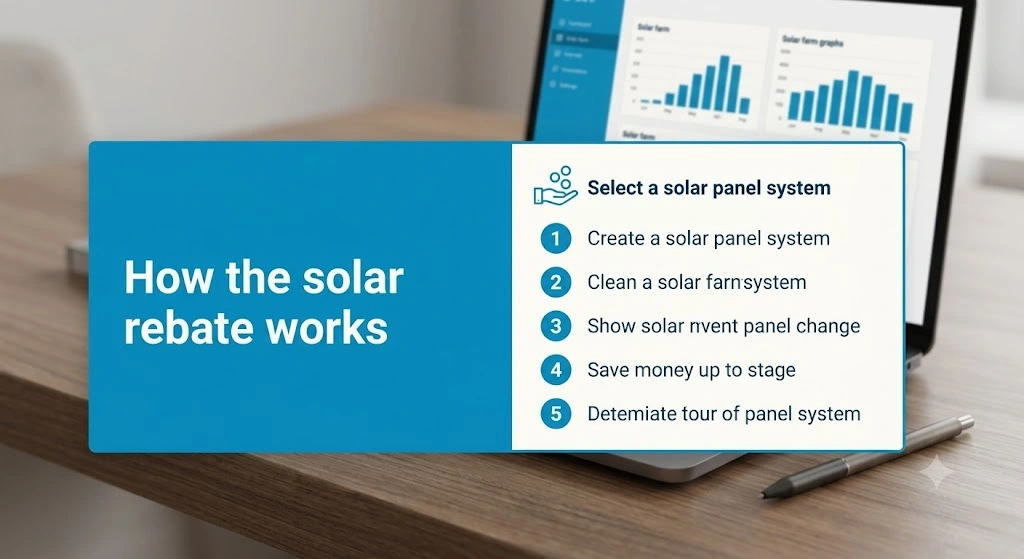
2. Solar Battery Rebate (Cheaper Home Batteries Program)
The Cheaper Home Batteries Program helps reduce the upfront cost of installing an eligible home solar battery system by around 30%. It is available whether you’re installing a battery with a new rooftop solar system or adding battery storage to an existing solar system.
The rebate is delivered through the Small-scale Renewable Energy Scheme (SRES) using Small-scale Technology Certificates (STCs). Like the solar panel rebate, your installer usually claims the STCs and deducts their value from your installation cost.
Who Is Eligible for the Solar Battery Rebate?
You may qualify if you:
- Install an eligible home solar battery with a usable capacity of 5-100 kWh.
- Connect the battery to a new or existing rooftop solar system.
- Use a battery listed on the Clean Energy Council’s approved products list.
- Have the battery installed by an accredited installer.
How Much Can You Get Through Solar Battery Rebate?
The Cheaper Home Batteries Program can reduce the upfront cost of an eligible solar home battery system by around 30%.
The exact discount depends on:
- Your battery’s usable capacity.
- The number of STCs it earns.
- The installation date.
Your installer will calculate the discount and include it in your quote before installation.
How To Claim Solar Battery Rebate in Australia
Most homeowners don’t need to apply for the rebate themselves.
Your installer calculates the STCs your battery is eligible for, applies the discount to your quote, and claims the STCs on your behalf after installation.
Eligible Solar Battery Systems Under Cheaper Home Batteries Program
To qualify, the battery must:
- Appear on the Clean Energy Council’s approved products list.
- Have a usable capacity between 5 kWh and 100 kWh.
- Connect to a new or existing rooftop solar system.
- Be installed by an accredited installer.
State by State Solar Rebates in Australia
Victoria Solar Rebates and Incentives
Victoria offers some of Australia’s most generous solar rebates through the Solar Homes Program, helping homeowners, landlords, apartment residents and community housing providers reduce the upfront cost of installing rooftop solar systems.
1. Solar Panel Rebate
The Solar Panel Rebate helps eligible homeowners install rooftop solar PV systems by providing a rebate of up to $1,400, along with the option of an interest-free loan of up to $1,400. To qualify, you must generally own and live in the property (or own a home under construction), have a combined household taxable income of less than $210,000 per year, own a property valued at less than $3 million, use an authorised Solar Victoria retailer, and not have previously received a Solar Homes solar panel rebate for the same property.
2. Solar Rebates for Rental Properties
Eligible rental providers can receive a rebate of up to $1,400, plus the option of an interest-free loan, to install rooftop solar panels on rental properties. To qualify, the property must be valued at less than $3 million, the landlord must not have previously claimed the rebate for that property, and both the landlord and tenant must meet the Solar Homes Program requirements.
3. Solar for Apartments Program
The Solar for Apartments Program helps owners’ corporations install shared rooftop solar systems on eligible apartment buildings, units, and townhouses. The program provides rebates of up to $2,800 per apartment, making it easier for residents who would otherwise struggle to access rooftop solar. Applications are generally made by the owners’ corporation on behalf of eligible apartment owners, and buildings must satisfy the program’s eligibility requirements.
4. Solar Rebates for Community Housing
Not-for-profit community housing providers can apply for rebates on behalf of eligible renters to install rooftop solar systems. Eligible providers can receive up to $1,400 per tenancy, helping lower electricity costs for tenants while improving the energy efficiency of community housing properties. Applicants must be registered community housing providers participating in the Solar Homes Program.
5. Local Council Solar and Energy Upgrade Programs
In addition to the statewide Solar Homes Program, some Victorian councils offer local rebates and support for eligible solar installations and other energy upgrades.
- Darebin Energy Upgrades
The Darebin Energy Upgrades Program, administered by the City of Darebin, provides eligible households and businesses with free energy advice and rebates of up to $3,500 for rooftop solar PV systems and other eligible energy upgrades.
- Hume Home Energy Upgrades Program
The Hume Home Energy Upgrades Program, administered by the Hume City Council, helps residents choose suitable rooftop solar systems and other eligible energy upgrades through personalised quotes, free advice and program support.
- Merri-bek Home Energy Subsidy Program
The Merri-bek Home Energy Subsidy Program, administered by the Merri-bek City Council, offers eligible residents up to $3,000 towards installing solar panels, along with rebates for other eligible home energy upgrades.
Australian Capital Territory (ACT)
The Australian Capital Territory does not currently offer a general statewide rooftop solar rebate like Victoria. However, eligible homeowners and businesses can access ACT Government programs that help reduce the upfront cost of installing rooftop solar systems and other eligible energy upgrades.
1. Home Energy Support Rebates for Homeowners
The Home Energy Support Program provides up to $5,000 in rebates to help eligible ACT homeowners cover the upfront cost of installing rooftop solar systems and other eligible energy-efficient upgrades. To qualify, applicants must generally own an eligible property, hold an eligible ACT concession card, and meet the program requirements.
2. Sustainable Business Program
The Sustainable Business Program helps eligible ACT businesses reduce the cost of installing rooftop solar systems and other eligible energy upgrades. Eligible businesses can receive up to $10,000 in rebates for approved energy efficiency projects. The program also offers free onsite assessments, tailored advice and resources to help businesses identify suitable upgrades. Businesses are required to make a co-contribution towards eligible projects.
South Australia (SA)
South Australia does not currently offer a statewide rebate for installing rooftop solar panels. However, eligible residents, businesses and community groups may be able to access local rebates through the Sustainability Incentives Scheme, alongside the federal solar incentives.
1. Sustainability Incentives Scheme
The Sustainability Incentives Scheme, administered by the City of Adelaide, provides renewable energy rebates to support sustainable technologies, including residential, business and commercial solar PV systems.
The program is available to eligible residents, businesses and community groups undertaking approved sustainability projects. In addition to solar PV, the scheme also supports other eligible energy upgrades. The rebate amount and eligibility requirements vary depending on the type of project and applicant.
Can You Combine Federal and State Solar Rebates?
Yes, in many cases you can combine federal and state solar rebates to maximise your savings. The federal Small-scale Renewable Energy Scheme (STCs) provides the nationwide discount, while eligible state, territory, and local government programs can further reduce the upfront cost of installing rooftop solar systems or home batteries.
For example, an eligible homeowner in Victoria can combine the federal STC discount (typically around $1,500 to $2,000 for a standard 6.6 kW solar system) with the Solar Homes Rebate of up to $1,400. Together, these incentives can reduce the upfront installation cost by more than $3,000, depending on the system size and eligibility.
Key Restrictions to Keep in Mind When Combining Solar Rebates
While many rebates can be combined, there are some important restrictions:
- You must qualify for each rebate separately. Meeting the eligibility requirements for the federal STC discount does not automatically make you eligible for state or local rebates.
- Rebates are location-specific. State and local incentives can only be claimed for eligible properties located within the relevant state, territory or council area.
- Most programs require approval before installation. If you install your solar system before receiving the required approval, you may lose your eligibility for the rebate.
- Some rebates are only available once per property. If a property has already received a particular rebate, it may not qualify for the same incentive again.
To avoid missing out on available savings, check the eligibility requirements for every rebate before signing an installation contract. An accredited solar installer can also help identify which federal, state, and local incentives can be combined for your installation.
Final Thoughts
If you’re planning to install a rooftop solar system, these government solar rebates can help reduce the upfront cost of an eligible installation. The key is to check what’s available and apply as early as possible, as some programs have limited funding, eligibility requirements, or require approval before installation begins.
Even if your state doesn’t offer dedicated solar incentives, you may still qualify for the federal Small-scale Renewable Energy Scheme (STCs) and other local incentives. Taking a few minutes to research your options could save you thousands of dollars and make switching to solar much more affordable.
Frequently Asked Questions About Australian Solar Rebates
How Do Solar Rebates Work?
Solar rebates reduce the upfront cost of eligible rooftop solar systems and solar batteries. The Federal Solar Panel Rebate works through Small-scale Technology Certificates (STCs), which your installer usually applies as an upfront discount before you pay for the installation.
What Are the Current Solar Rebates?
Australia currently offers two nationwide government solar rebates: the Federal Solar Panel Rebate (STCs) and the Cheaper Home Batteries Program. Depending on where you live, you may also qualify for additional state or local government solar rebates.
When Do Solar Rebates End
The Federal Solar Panel Rebate (STCs) is scheduled to end on 31 December 2030. However, the rebate gradually decreases each year as fewer STCs are issued. State and territory rebate programs have different closing dates and funding limits.
What Mistakes Should You Avoid When Applying for Solar Panel Rebates?
Common mistakes include choosing an unaccredited installer, installing ineligible products, missing state rebate requirements, or waiting too long to apply. Always check the latest eligibility rules before signing a contract.
How Much Is the Solar Battery Rebate?
The solar battery rebate depends on your battery’s usable capacity and the rebate program you qualify for. Your installer will calculate the discount and apply it upfront, reducing the cost of installing an eligible solar battery system.
What Is the $7,000 Solar Rebate in NSW?
There is no current $7,000 solar rebate in NSW. The figure refers to the now-closed Empowering Homes program, which offered interest-free loans of up to $14,000 for eligible solar and battery systems, with an effective subsidy value of around $7,000.
How Long Does It Take to Receive a Solar Rebate?
The time it takes to receive a solar rebate in Australia depends on the rebate program. The Federal Solar Panel Rebate (STCs) is normally applied as an upfront discount by your installer, meaning you benefit from the savings straight away. State and local government rebates usually take between 4 and 12 weeks after your application has been approved, depending on the program and location.